

Not sure whether your home in Georgia is connected to city sewer or has a private septic tank? You’re not alone. Many homeowners — especially in growing counties like Gwinnett, Walton, Barrow, and Hall — are unsure until a plumbing issue arises.
In this post, the experts at Right Time Septic break down the simple signs and tools you can use to determine if your property is on septic — and what to do next.
Common Signs Your Home Is on a Septic System
1. You Don’t Get a Sewer Bill
If you’re not being charged for sewer service on your monthly utility bill, there’s a good chance your home is using a septic tank instead. Most sewered homes pay fees to a city or county utility.
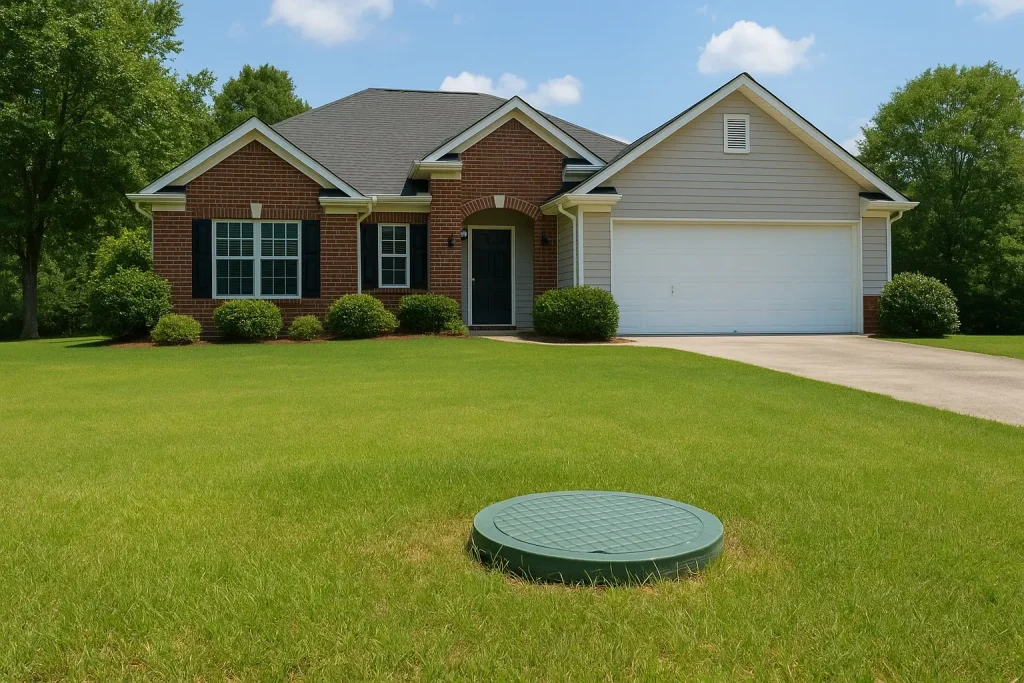
2. You See a Tank Lid or Riser in the Yard
Look for a round or square plastic or concrete lid in the lawn, typically 10–30 feet from your house. This gives access to your septic tank and is often flush with the ground or slightly raised.
3. You’re Outside a City Limit or in a Rural Area
Homes in unincorporated areas or counties like Walton, Barrow, and parts of Hall or Gwinnett often use private septic systems. Even in some subdivisions, septic is still common depending on lot size and age of the neighborhood.
4. Neighbors Have Septic Tanks
Ask around. If nearby homes use septic, yours likely does too — especially in older or less densely developed areas.
5. You Have a Drain Field
A septic drain field (also called a leach field) may show as a patch of green, flat grass with no trees, irrigation, or structures. It’s a telltale sign your home has a septic system.
How to Confirm for Sure
If you’re still not certain, here are two easy ways to verify:
Call Your Local Water Authority
Ask if your home is connected to city sewer. Provide your address, and they’ll let you know.Request a Septic System Lookup
In many Georgia counties, septic records are kept by the county environmental health department. Right Time Septic can help you contact the right office and even request records for you.
Why It Matters
Knowing if you’re on septic is critical for:
Scheduling regular pumping (every 3–5 years)
Avoiding backups and costly repairs
Buying or selling your home (many lenders require a septic inspection)
Still Not Sure? Let Right Time Septic Help
At Right Time Septic, we’ve helped thousands of Georgia homeowners identify and maintain their septic systems. Whether you’re in Gwinnett, Walton, Hall, DeKalb, or Rockdale, our team can confirm your setup and provide fast, affordable service.
Call today or request an inspection — and never guess about your septic system again.


